
AI & Content Marketing
Your next customer might ask an
What Sarah Mitchell's talk at Morning Startup Perth taught us about staying visible when customers ask AI instead of Google.
Your next customer might ask an AI about you first.
Sarah Mitchell asked an AI who the best award writers in Perth were. Her own agency didn't come up. Here's what that means for your website.
Created: August 13, 2026 | Updated: 13/08/2026 | Reading Time: 7 minutes


Do you know what the ai going to say?
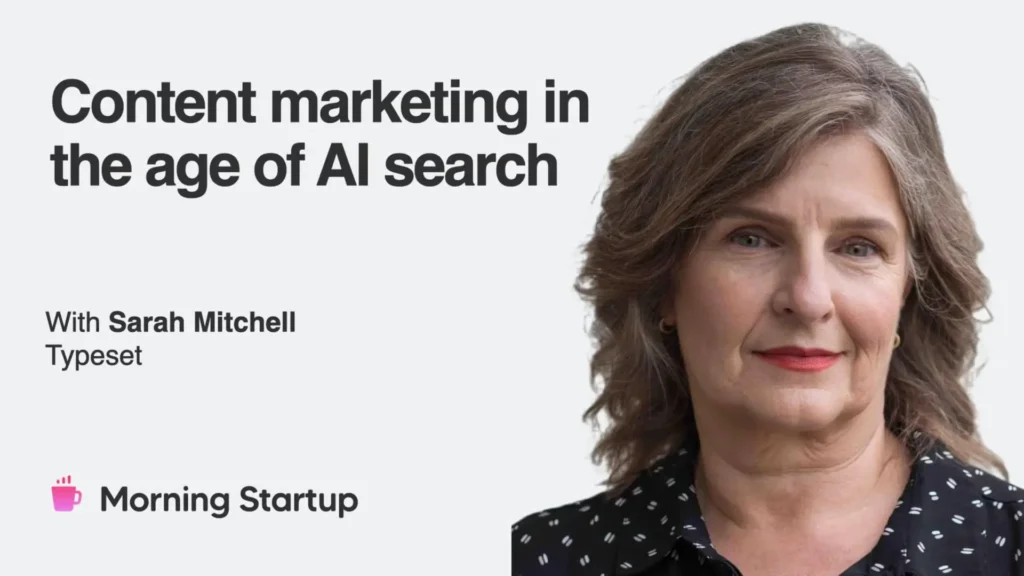
This morning I was at Morning Startup Perth to hear Sarah Mitchell from Typeset talk about content marketing in the age of AI search. I walked out with a to-do list for our own website and a longer one for each of our clients which is usually the sign of a good talk.
Sarah has been doing this for thirty years, since before anyone called it content marketing. When she was asked to speak about AI search, she did the sensible thing and tested her own premise first: she asked Claude who in Perth are the experts at writing award submissions. Typeset didn’t come up.
Sole traders came up. A couple of interstate operators making big claims about shortlisting rates came up. So she asked why, and the answer landed like a brick. The gap, she was told, was “self-inflicted.” It was a structural problem, not a content problem. She had spent a year making clients visible in AI and hadn’t done it for herself.
What has actually changed
Nobody is abandoning Google. But a growing number of people have stopped typing keywords into a bar and started having a conversation instead. They ask Claude or ChatGPT or Perplexity a full question, read the answer, then refine. Best coffee in Perth. Okay, who does oat milk. Okay, who does ten sizes. They often never click through to anyone’s website at all, which is why site traffic is down across the board while enquiries can still be strong.
That gives you two separate reasons to care. One is traffic, which is the obvious one. The other is simply being the name that gets mentioned. Sarah made this point with an aged care client of hers who has a fixed number of beds and can’t serve everyone anyway. For them, being cited as the authority is the entire branding win.
Here’s the reassuring part, and it’s the thing I’d most want our clients to hear: this does not require a rebuild. Good SEO is the foundation that AI search runs on. If you’ve done that work, you haven’t wasted it. What’s usually missing is structure.
It’s a structure problem
Most of Sarah’s practical advice was about making your content easy for a machine to lift an answer out of. Keep blocks of text under about 300 words, because a model hunting for a specific answer won’t wade through a wall of prose. Put the answer in the first sentence of the paragraph and explain afterwards, rather than building to a conclusion.
Use your H1, H2 and H3 tags properly so the hierarchy of the page is obvious. Turn your keywords into the questions your customers actually ask, and use those questions as your subheadings. Add short summaries of three or four sentences, because complete, self-contained answers get cited. Include definitions even when you think your readers don’t need them, because the AI might. Build comparison tables. Embed video and audio. Use schema markup, especially for FAQs.
And check how deep your pages are buried. Depth signals importance, and Sarah’s own award submissions page was five clicks down behind the homepage, services and workshops. That one hurt her.
The related point is that people now ask questions that fan out. Someone doesn’t search “cross-training shoes,” they ask what the best ones are, then which suit wide feet, then how they differ from running shoes, then where to buy them near their suburb. If your page anticipates that chain with the main question as an H2 and the follow-ups as H3s, you’re in the conversation. If it targets one long-tail phrase, you’re not.
The bit that should sting a little
Sarah believes we’re into the third or fourth generation of AI-generated content, the snake eating its own tail. Which means the fastest way to become invisible is to publish what the chatbot handed you. Everyone else is publishing that. The models are hunting for something they haven’t seen.
So: original research, a genuine point of view, an opinion you’re willing to put your name to. And original research doesn’t mean commissioning a study. Run a poll on LinkedIn, get fifty answers, write it up. That’s data nobody else has. By all means use AI for the first draft, then go in and make it sound like you.
Proof matters too, and this is one we see clients neglect constantly. Specific customers, specific outcomes, testimonials on the homepage and on your service pages rather than parked on a page nobody visits, and kept current. Case studies do particularly well, because a problem, a solution and an outcome is exactly the shape of information a model wants when it needs to back up a claim. And be blunt about what you do: your core services belong at the top of your homepage and in your title tags, not just tucked in the navigation.
Less, but better
The advice I liked most was the least intuitive. If a page is doing nothing, delete it. More is not better, and a leaner site gets better results from the content that’s actually working.
Same logic applies when something starts ranking. Don’t write a second, similar article next to it and split your own signals. Go back into the one that’s working and improve it: extra subheadings, an FAQ with schema, a comparison table, better images. Any meaningful change prompts a re-crawl, and you keep the ground you’ve already won.
Sarah also made a point about ownership that’s worth repeating. Your email list is the only audience you actually own. Everything on social is rented land, and the rent changes whenever someone updates an algorithm. If you’re choosing where to spend a limited amount of time this quarter, a subscription box and a newsletter beat another platform.
The honest call
Nobody knows how these models decide who to cite. The mechanics differ between ChatGPT, Claude, Gemini, Perplexity and Google’s AI Overviews. You can ask the same question three times in a day and get three different answers, and nobody can tell you why or whether that will settle down. Sarah was upfront that there are no guarantees here, only better odds. Anyone promising you a ranking in AI search is making it up.
What we do know is the negative case: unstructured content will never get picked up.
Her best example was a third-generation family manufacturer here in Perth, competing against much better-funded American and European rivals. Six years of genuinely useful content for engineers, then eight months ago they restructured it for AI and cleared out the pages that weren’t earning their keep. He’s now routinely cited across his whole category.
The kicker is that as of this week his competitors have started showing up too, having shifted budget out of paid search into ranking in ai. The window is open. It just isn’t going to stay open forever.
Try this before you close the tab
Go and ask Claude, ChatGPT, Gemini, and Perplexity who the best version of your business in your city is. All three, because they’ll disagree. It takes two minutes and it will tell you more about your current position than any report.
If any of the above made you wince, it’s time to give it a go. Structure, hierarchy, proof and a bit of ruthlessness about pages that don’t earn their place. It’s not glamorous work, but it’s the work. Send us a brief and we’ll tell you honestly where you stand.
Thanks to Morning Startup Perth for the session and to Sarah Mitchell of Typeset for the talk and the handout. The full recording is on the Morning Startup Perth livestream page.
On this page
We’re here to help you DeCODE the Digital World
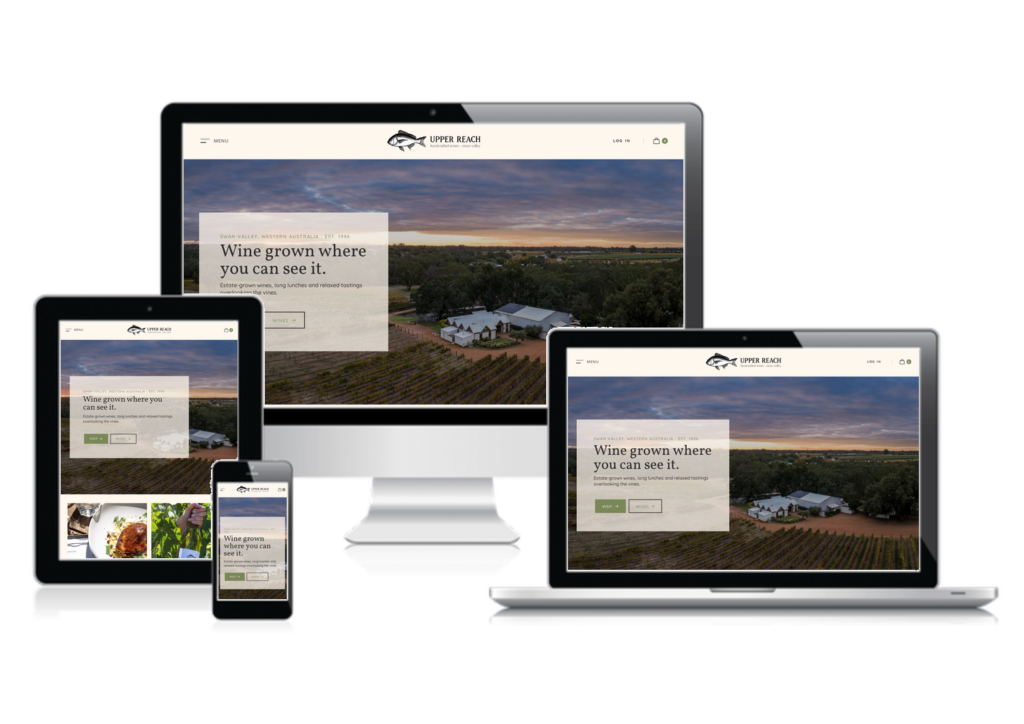
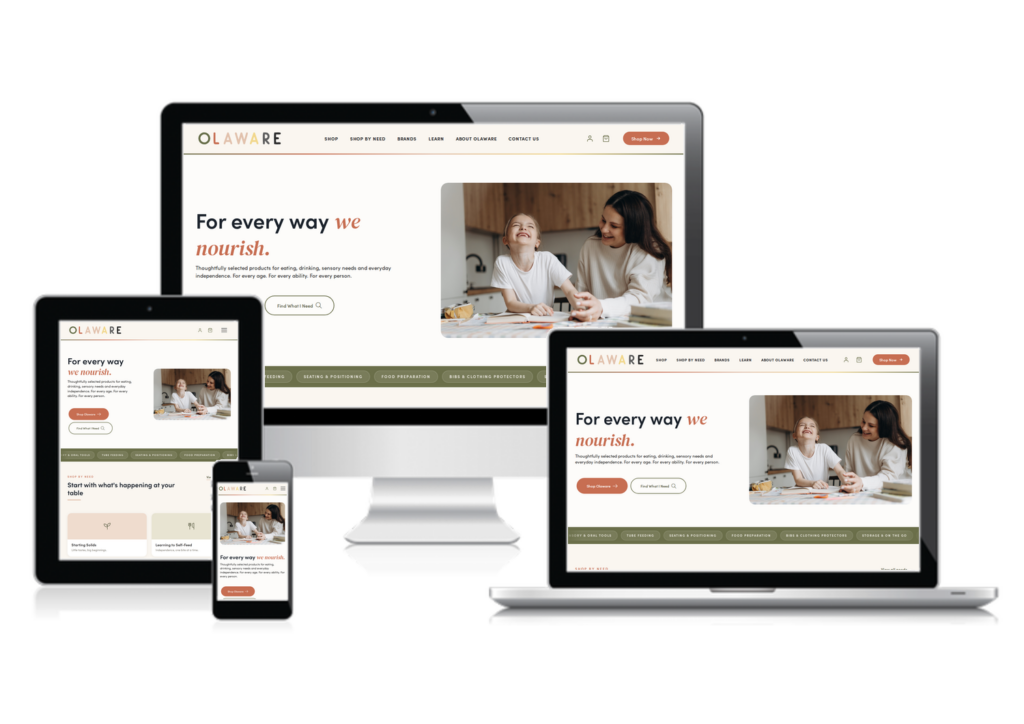
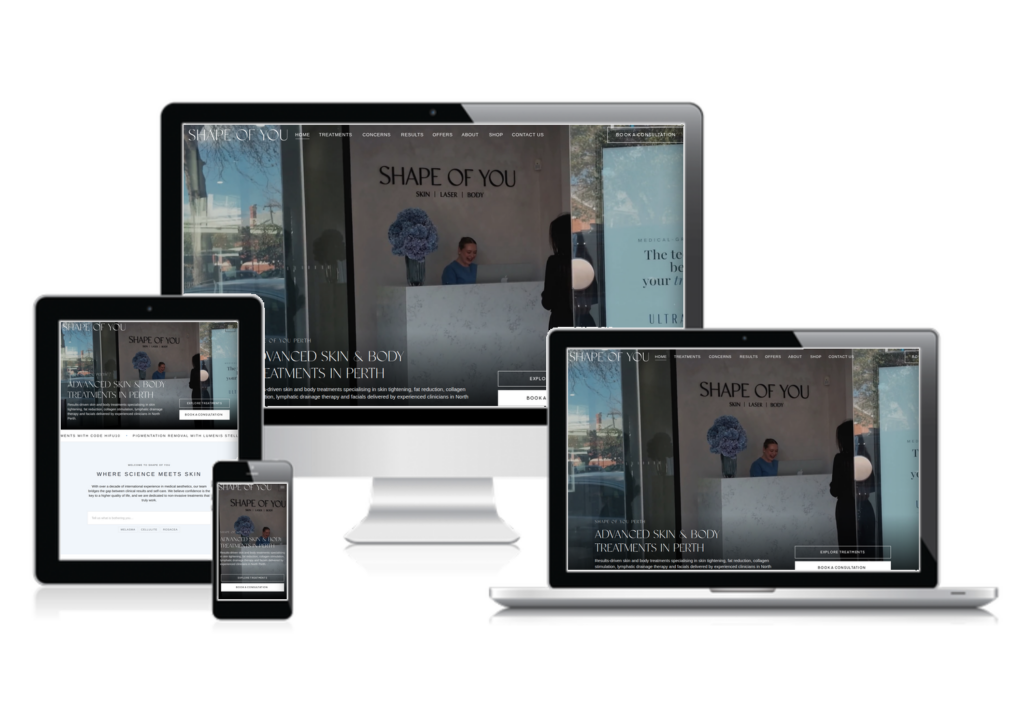
DeCODE builds breathtaking websites that drive sales for your business without a price that would take your breath away.
We understand that Companies don’t need websites. Companies need a regular stream of high-quality leads. Customers eager, educated, and ready to purchase their products or share their vision. This is the core of a DeCODE build.
In 2026 websites are no longer set and forget, winning an online race is now a marathon, not a sprint. Visually stunning sites with limited back end functionality and no ability to perform in search are redundant.
At DeCODE we build sites that perform.





Adam is a digital marketing specialist, business strategist, and Partner at DeCODE Digital, with 20+ years across marketing, sales, business strategy, and commercial transformation. He works with businesses that need more than a marketing plan: a clear strategy, stronger market position, and a digital presence that drives real commercial growth.