
Domains & Compliance
Why .com.au websites are
A lapsed ABN can quietly take down your domain, website and email, so here is how the rules work and how to stay compliant.
Why .com.au websites are going offline, and the ABN rule behind it
A lapsed or cancelled ABN can quietly cost you your .com.au domain, your website and your email. Here is how the rules work, what the timeframes are, and how to keep yours safe.
Created: June 23, 2026 | Reading Time: 3 mins


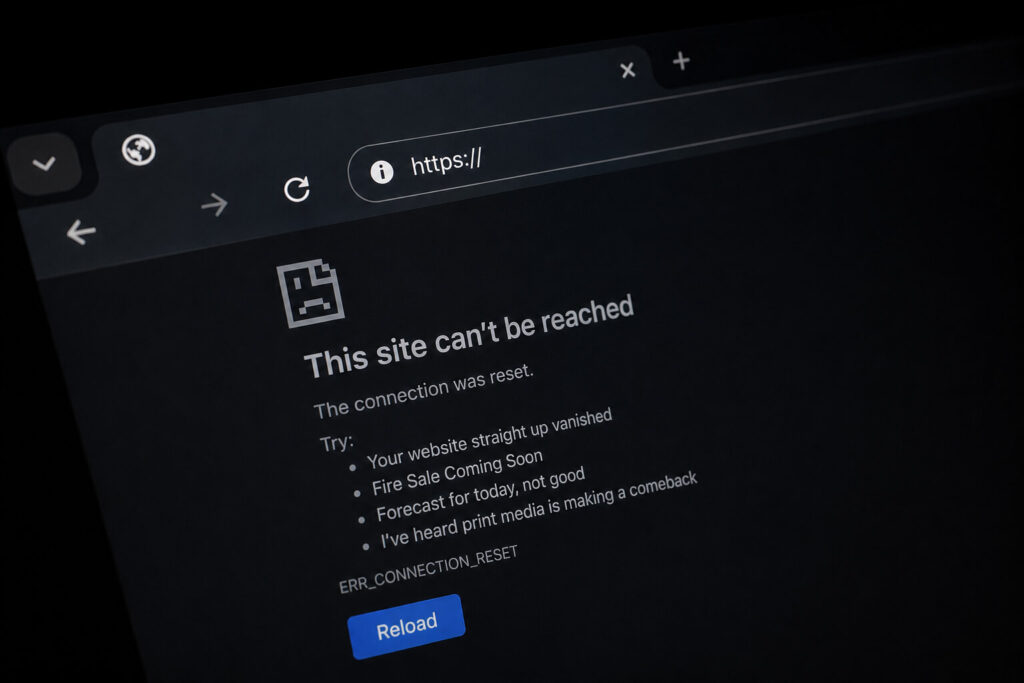
Over the past few months we have seen a worrying pattern: established business websites suddenly going offline, taking their email down with them. In several cases the cause was not hacking, a hosting fault or a missed invoice. It was the domain name itself.
The common thread is the ABN. To hold a .com.au or .net.au domain in Australia, the business behind it has to stay eligible, and that eligibility is tied to an active Australian Business Number or Australian Company Number. When that ABN lapses or is cancelled, the domain can be suspended and eventually lost, no matter how long you have owned it.
With the rules around this tightening in 2026, it is worth understanding exactly how the system works, what the timeframes are, and how to make sure your domain is safe.
The rule behind every .com.au and .net.au
Every .au domain must have what auDA, the administrator of the .au namespace, calls an Australian presence. For commercial domains like .com.au and .net.au, the most common way to meet that requirement is an active ABN or ACN. A few other options exist, including an Australian Registered Body Number or an Australian trade mark that exactly matches the domain, but for most small businesses it comes down to the ABN.
These requirements were tightened under the .au Licensing Rules that took effect on 12 April 2021, which made the link between your business identifier and your domain much stricter.
Eligibility is not a one-time check
A common misunderstanding is that eligibility only matters when you first register. It does not. Your ABN or ACN needs to stay active and accurate for the entire life of the domain licence.
If the ABN is cancelled, deregistered or simply allowed to lapse, the registrant behind the domain is no longer eligible to hold it. This happens more often than people expect, usually when a business restructures, changes entities, is sold, or a sole trader stops trading and lets the ABN go inactive without realising the domain was attached to it.
What changed on 20 May 2026
From 20 May 2026, auDA introduced stricter renewal enforcement across all .au domains. The headline change is simple but significant: your domain will only renew if the ABN or ACN linked to it is current and active.
Compliance is now checked at renewal, within the 90-day renewal window. If your business details do not match an active entity during that window, the renewal is blocked and the domain can be deleted. For now these checks apply to ABN and ACN details, with trade mark based requirements expected to follow later.
In plain terms, a lapsed ABN that might once have slipped through is now far more likely to cost you the domain.
What actually happens when your ABN lapses
The process does not happen all at once, but the window to act is shorter than most businesses assume.
- 1. Your domain is flaggedA domain can be flagged for a compliance check at registration, after registration, on transfer or at renewal. Your registrar contacts you and sets a deadline to fix the eligibility issue, which has to be met before the domain expiry date.
- 2. You are asked to fix itYou are usually notified to update the domain to a valid, eligible registrant, often within around 30 days, to prevent suspension. In most cases this means a Change of Registrant to a business with an active ABN or ACN.
- 3. The domain is suspendedIf the issue is not resolved in time, the licence is suspended. At this point the website and any email running on the domain stop working, so the impact is immediate and visible to your customers.
- 4. The domain is cancelled and releasedAfter suspension the domain moves into the deletion cycle: around 30 days on Expired Hold, then a short Pending Purge stage of roughly one to two days, after which it is released and anyone can register it. Unlike .com domains, .au has no paid redemption period to buy it back.
Why a domain that is still renewable can take your site offline
There is an important catch in that timeline. The moment a .au domain expires or is suspended, it is removed from the DNS. That means the website and email go dark straight away, even during the 30-day Expired Hold period when the domain can technically still be renewed.
By the time most businesses notice the outage, the clock is already running. And if the underlying ABN cannot be made valid again, renewing is not even an option.
How to check your domain today
The good news is that this is easy to check, and most issues are straightforward to fix if you catch them early.
- Look up your domainRun a WHOIS search at the auDA register (whois.auda.org.au) to see the registrant details and the ABN or ACN currently attached to your domain.Check your domain →
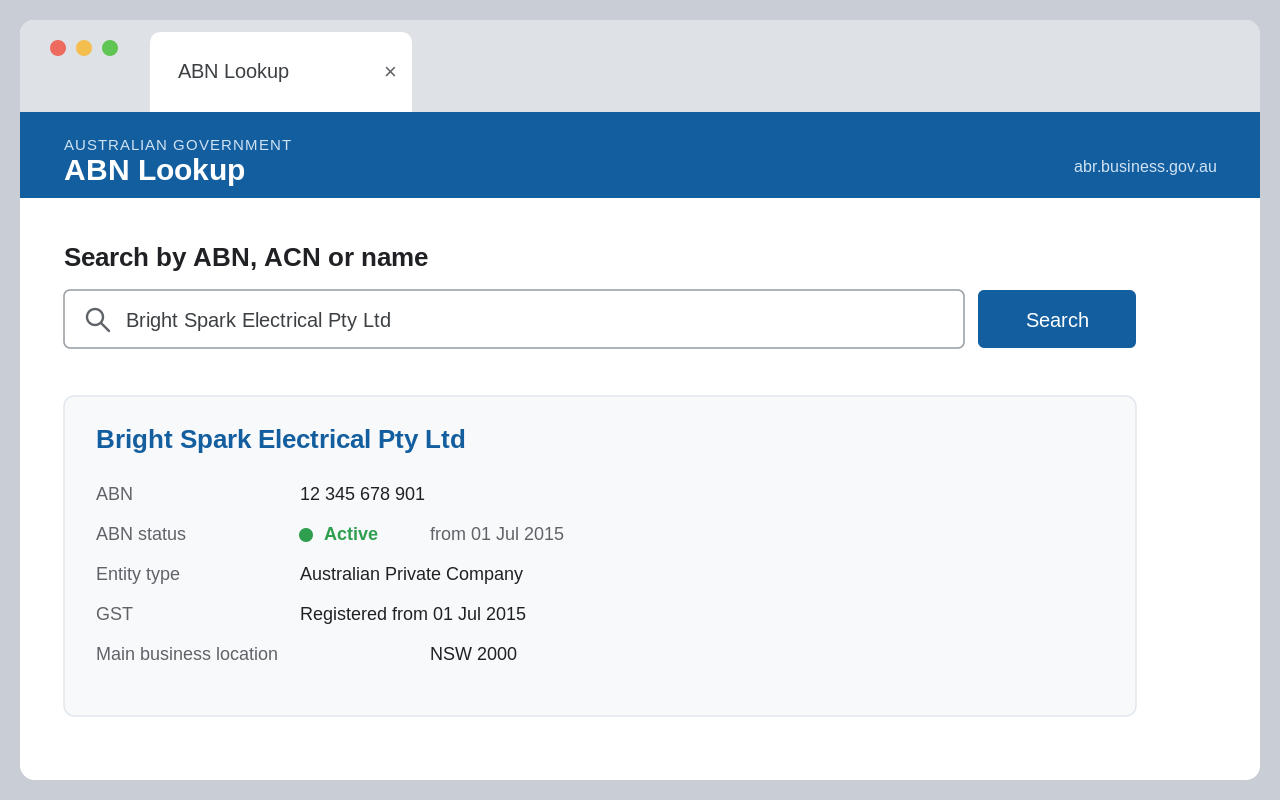
- Verify the ABN or ACNCheck the ABN at the ABN Lookup register, and any ACN through ASIC. Confirm it is active and that it matches the business that actually owns the domain today.Look up your ABN →
- Confirm your contact detailsMake sure the registrant email on the domain is one you genuinely monitor. Compliance notices are sent by email, and a missed notice is one of the most common reasons domains are lost.
How to fix an eligibility problem
If your ABN has lapsed, you can usually reactivate or reapply for one through the Australian Business Register. It is free and, in many cases, approved immediately online, which restores your eligibility.
If your business has changed entity, you will need a Change of Registrant to move the domain to the eligible business. Where the old ABN or ACN was cancelled, you may be asked for supporting documents such as a sales agreement, a signed letter on company letterhead, or a statutory declaration showing the domain changed hands.
Either way, do not wait for the renewal notice. Sort out any mismatch well inside the 90-day renewal window so the renewal goes through cleanly.
One thing worth knowing: your domain is managed through your domain registrar, the company you originally bought the domain from. That is often a different business from whoever built or hosts your website, so this is not something a web designer or hosting provider can simply fix on your behalf. A WHOIS search will show you who your registrar is if you are not sure.
The practical takeaway
Losing a domain is one of the most disruptive things that can happen to a business online, and it is almost always avoidable. Keep your ABN active, keep your registrant details accurate, renew early, and check your domain before the rules check it for you.
If one of your sites has gone offline and you are not sure why, feel free to get in touch and we can help you work out what is going on.
This article is general information, not legal advice. If your situation is more complex, for example a domain held under a trust or a business that has changed hands, it is worth getting tailored advice.
On this page
We’re here to help you DeCODE the Digital World
DeCODE builds breathtaking websites that drive sales for your business without a price that would take your breath away.
We understand that Companies don’t need websites. Companies need a regular stream of high-quality leads. Customers eager, educated, and ready to purchase their products or share their vision. This is the core of a DeCODE build.
In 2026 websites are no longer set and forget, winning an online race is now a marathon, not a sprint. Visually stunning sites with limited back end functionality and no ability to perform in search are redundant.
At DeCODE we build sites that perform.









Ilana is a Web Designer & Development Consultant with 15+ years building websites that actually perform: ecommerce stores, membership platforms, training portals, and SEO rebuilds that turn slow, dated sites into properties that rank and convert.