
Case study
Launching
Taking a new car-buying brand to market with brand strategy, web design and launch support.
Taking A New Perth Car-Buying Brand to Market – Sell My Car Pro
A full go-to-market partnership with Sell My Car Pro covering Google Business Profile, ads, social setup, paid campaigns, on-site optimisation, conversion testing and an ongoing content programme built to win share of voice from day one.
Created: May 21, 2026 | Reading Time: 6 minutes


A full go-to-market partnership with Sell My Car Pro, the new specialist sell my car service launching into the Perth market as a Licensed WA Motor Vehicle Dealer and Motor Trade Association member. As the digital partner for the launch, DeCODE Digital led the strategy and execution behind taking a brand-new product to market, covering Google Business Profile and Ads setup, social media channel build, paid social campaigns, full on-site optimisation, conversion testing, and an ongoing content and blog programme designed to win share of voice from day one.
A Go-To-Market Partnership for a New Perth Car-Buying Brand
Sell My Car Pro is a new product entering one of the most competitive verticals in Perth’s digital landscape. The “sell my car” search space in Western Australia is saturated with national aggregators, dealer-group websites, and bidding platforms, all of which spend heavily on Google and Meta to capture seller intent. For a brand-new entrant, the cost of waiting to be discovered is the entire opportunity. A new product in this category either lands in market with a complete digital footprint and starts compounding from day one, or it loses 12 months to incumbents that already own the search results.
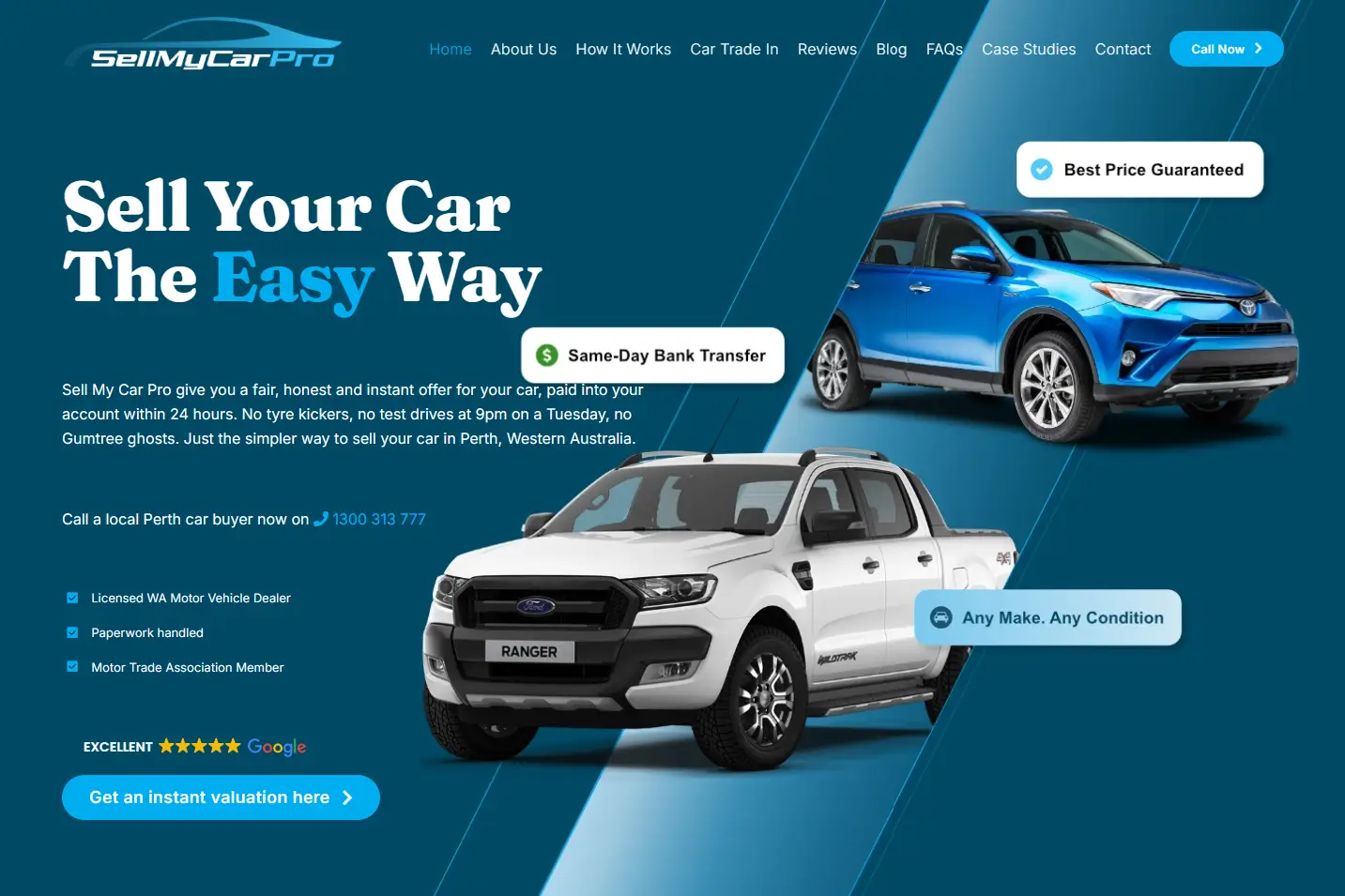
The Opportunity
The founder approached us at the formation stage, before the brand assets were finalised, the trading name was registered, or the licensing approvals had been issued. That early involvement is what turned the engagement into a true partnership rather than a vendor handoff. We were able to influence the brand positioning, the service architecture, the domain strategy, and the licensing-aligned content from the start, so that every later digital decision sat on top of a coherent foundation.
The shared goal was simple: take a new car-buying brand to market in Perth with a digital footprint that punched above the weight of a new entrant, generate qualified seller enquiries from week one of paid media going live, and lay the foundation for organic traffic to compound over the first 12 months.
Our Approach as the Launch Partner
We structured the engagement as an integrated go-to-market partnership rather than a sequence of one-off project deliverables. The brand, the platform, the listings, the paid media, the organic content, and the conversion tracking were all built in parallel so that the day Sell My Car Pro went live, every channel was contributing data back into the same dashboard.
That parallel build is only possible when the agency sits inside the launch as a partner rather than an external supplier. Weekly strategy sessions with the founder shaped the service categories, the early pricing position, the licensing-led trust signals, and the channel mix. Decisions made in those sessions flowed directly into the build the same week, which is how a new product compresses what would normally be a 9-month launch into a focused 90-day go-to-market window.
The phased approach ran across four stages. Foundations covered the domain, hosting, analytics, tag management, and conversion infrastructure. Channel setup covered Google Business Profile, Google Ads, Meta, and the supporting social accounts. Content build covered the on-page SEO, service pages, and the launch blog cluster. Test and optimise covered the ongoing rhythm of A/B testing, ad iteration, and analytics review.
This sequencing matters for any new product launch in a paid-media-led category because the worst outcome is spending heavily on traffic that lands on a half-finished site or a page with no conversion tracking. By the time the first ad dollar was spent, every form submission, phone click, and instant-quote enquiry was attributed back to its source channel.
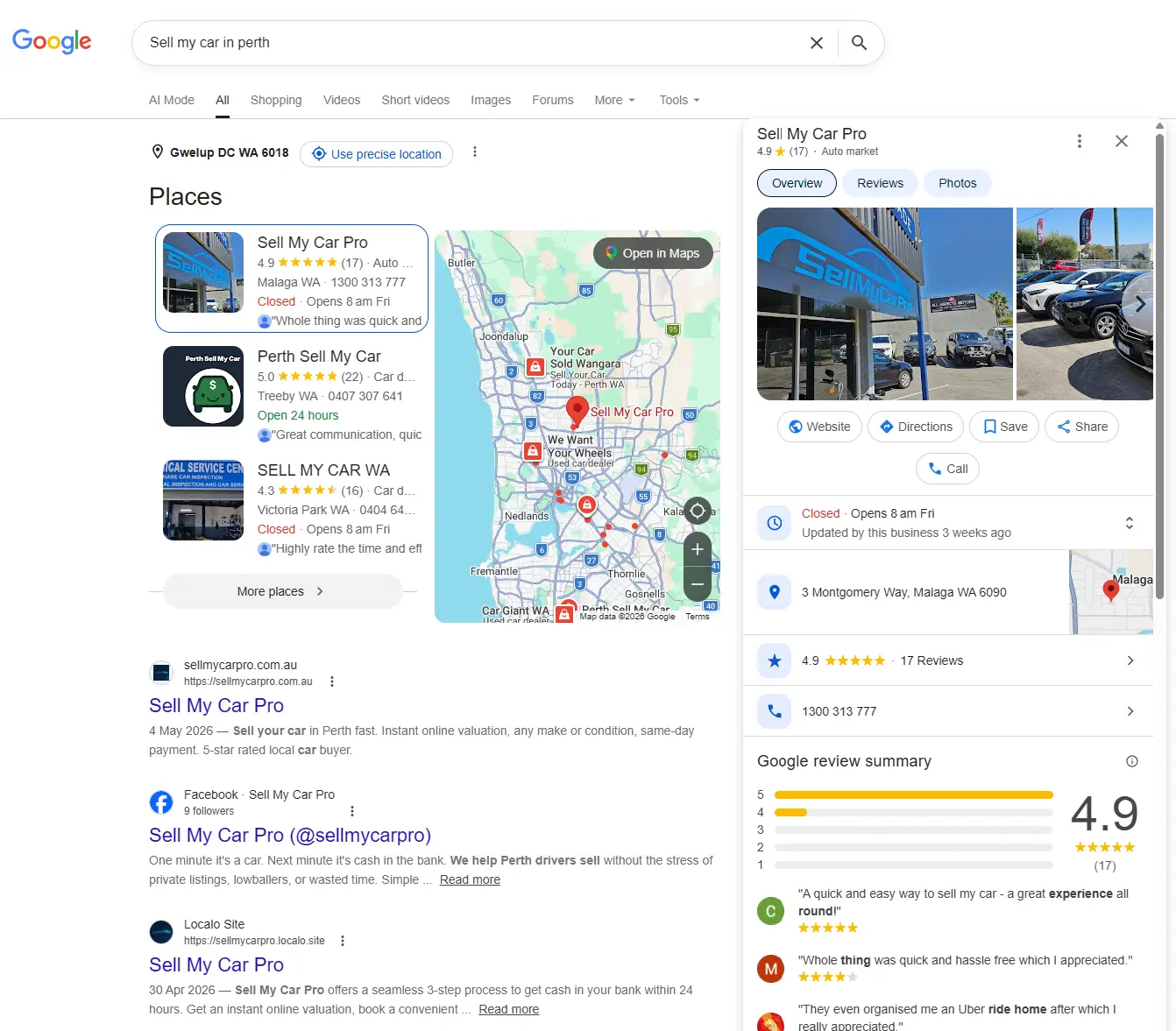
Channel Build: From Google to Meta to On-Site
Google Business Profile and Local SEO Foundations
The first build was the Google Business Profile, optimised for the “Perth car buyer” and “sell my car Perth” search clusters that drive the strongest local intent. We claimed and verified the profile, set up the correct category and service taxonomy, mapped service areas across the Perth metro, populated the photo gallery, set up posts, and connected the profile to a dedicated tracking phone line so that calls from search results could be measured separately from direct calls.
Local citations were built across the directories that Google’s local algorithm weighs most heavily for Australian motor dealers, with consistent name, address, and phone formatting across every listing to support local pack ranking. Schema markup was layered on the website (LocalBusiness, AutoDealer, FAQPage, Service) so that the structured data backed up the local-business signals.
Google Ads Setup and Digital Media Strategy
Paid search was the most important demand-capture channel for a launch of this kind because “sell my car Perth” and the associated long-tail queries are searched by users who are ready to transact. We built a campaign architecture grouped by intent cluster, separating high-intent transactional terms (“sell my car Perth”, “car buyers Perth”, “instant car valuation Perth”) from research terms (“how to sell a car privately”, “trade in vs sell privately”) and using tightly themed ad groups inside each.
Negative keyword lists were populated before the campaigns went live, screening out the dealership-buying intent that would otherwise drain budget. Conversion tracking was set up for form submissions, phone calls of more than 60 seconds, and instant-quote tool completions, with imported conversions feeding back into Google Ads so the algorithm could optimise on the right signal.
Display and YouTube campaigns were layered on later as remarketing pools grew, retargeting users who had visited a service page or started a quote but not completed it. The full digital media strategy was designed to capture intent at the search level, then re-engage anyone who slipped through the funnel.
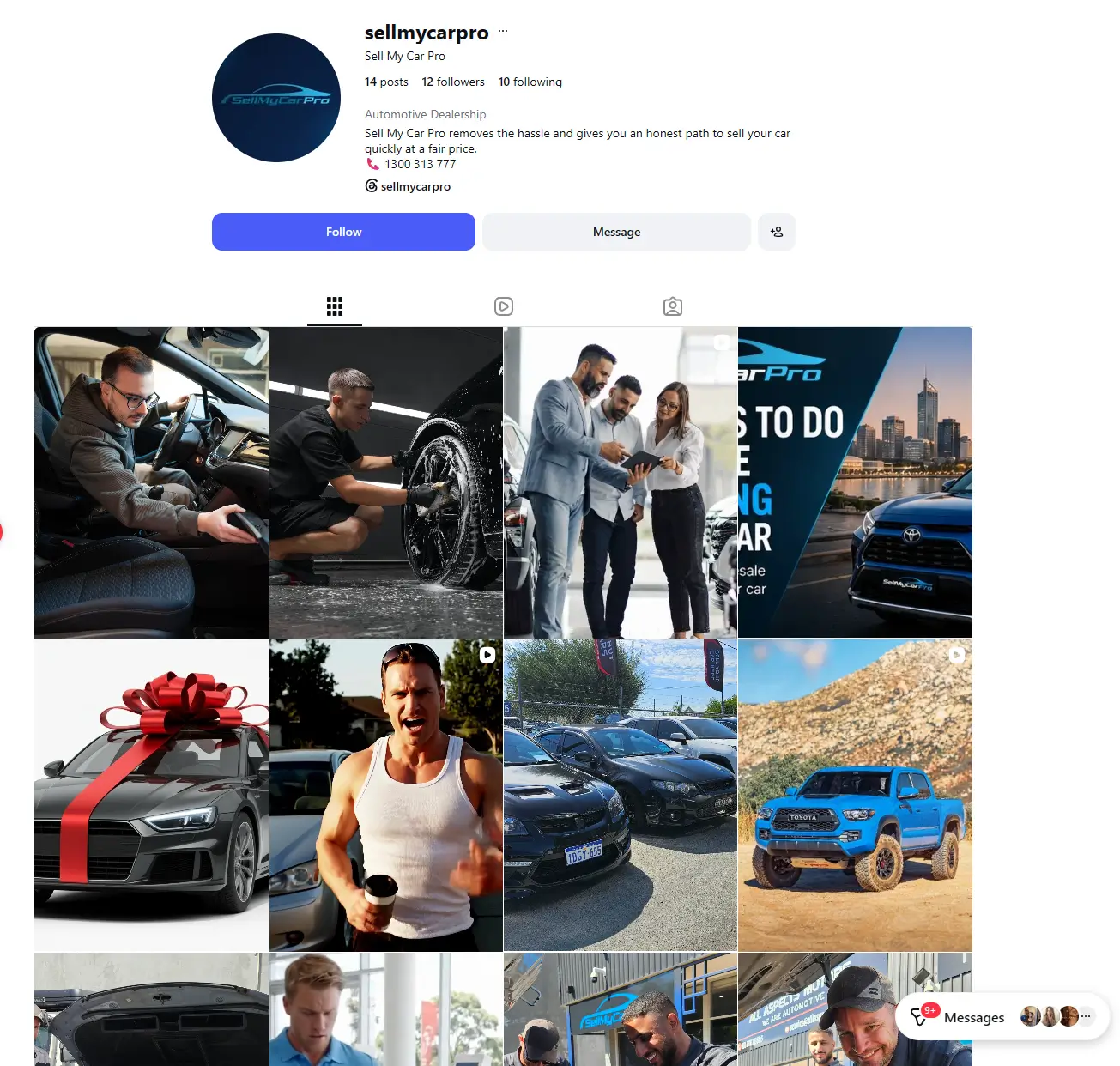
Social Media Channel Setup
Three primary channels were built and activated: Facebook, Instagram, and LinkedIn. Each was set up with consistent brand assets (logo treatments, cover graphics, bio copy, link-in-bio strategy), connected to Meta Business Manager, and integrated with the pixel infrastructure to feed conversion data back into the paid social campaigns.
The Facebook page was structured for both organic content and paid distribution, with the page review system enabled to build social proof from day one. The Instagram profile was set up as a business account with shoppable post infrastructure ready for promotional campaigns, and the LinkedIn company page positioned Sell My Car Pro for the corporate-buyer and FIFO-worker audience that the founder identified as a key segment.
Social Media Advertising Setup
Paid social ran on two tracks. The first track was prospecting, targeting Perth metro adults with vehicle-ownership signals and broad interest categories aligned with car-selling intent. The second track was remarketing, using website visitor pools and engagement audiences from the organic content to re-engage warm prospects.
Creative was produced in batches of three to four variants per campaign, rotated weekly during the launch window so that audience fatigue and creative performance could be measured cleanly. The campaign structure used Advantage+ placements where the auction data supported it, with manual placements layered in for the audiences where granular control delivered better cost per qualified lead.
The Meta pixel and Conversions API were both deployed so that signal quality remained high even with the ongoing privacy-related shifts to cookie-based tracking. This dual setup is increasingly important for any local business running paid social, and we treat it as standard in any launch programme.
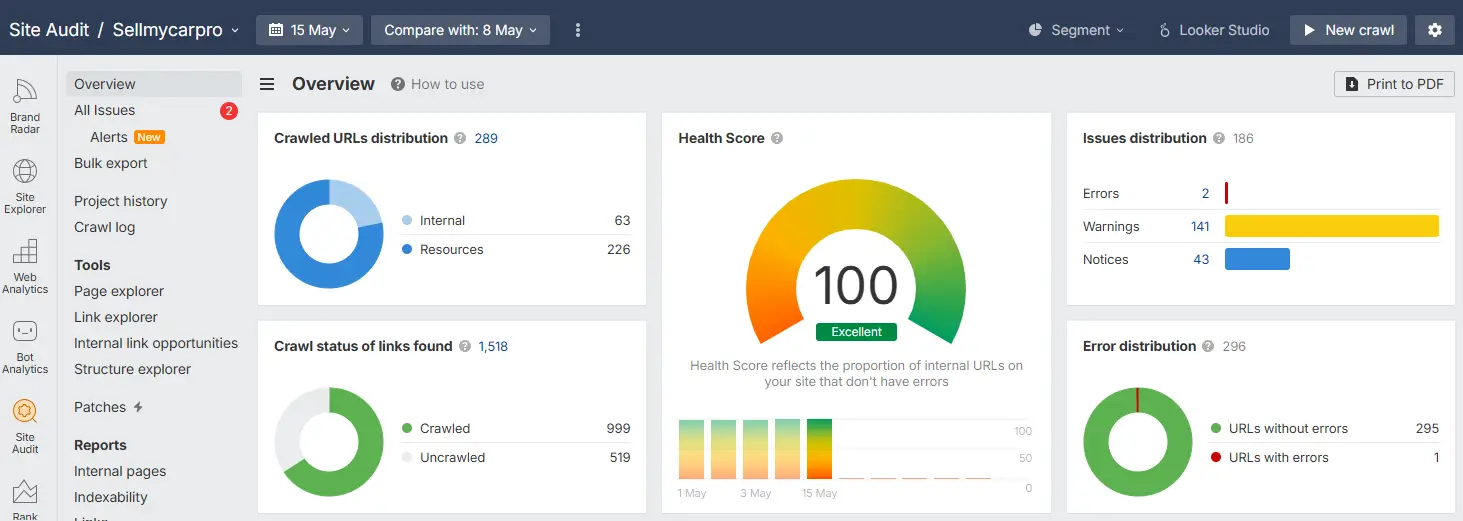
On-Site Optimisation and Conversion Foundations
The website itself was structured around clear, action-driven service pages. The homepage led with the brand promise and an instant valuation tool, with secondary calls to action for the phone line and the contact form. Service pages were built for each vertical (used cars, cars under finance, older or high-kilometre cars, damaged cars, and trade-ins), with each page targeting a primary keyword cluster and optimised for local search intent.
On-site SEO covered the technical and the editorial. Page speed was tuned through image compression, caching configuration, and lazy-loading for below-the-fold content. Internal linking was mapped against a content cluster strategy so that authority flowed cleanly from blog content to service pages to the homepage. Meta titles, descriptions, and schema were configured on every published URL.
Crucially, every page was built with conversion in mind. Click-to-call buttons sat in the top navigation across mobile and desktop. The instant valuation form was repeated at logical scroll points. Trust signals (the WA Motor Vehicle Dealer licence, Motor Trade Association membership, Google reviews, payment-method assurances) were placed where they would do the most work for buyer confidence.
Testing And Conversion Rate Optimisation
The launch programme included a built-in testing cadence rather than a “set and forget” handoff. Heatmapping was deployed across the homepage and the service pages so that real user behaviour could inform iteration decisions. Form analytics tracked drop-off points on the valuation tool, identifying friction in the field order and surfacing improvements that lifted completion rates over the first three months.
A/B tests ran on hero headlines, call-to-action button copy, form field order, and trust-signal placement. Paid media creative was tested in rotation with weekly performance reviews, and search-ad copy was iterated against the live click-through and conversion data rather than relying on a static set of headlines.
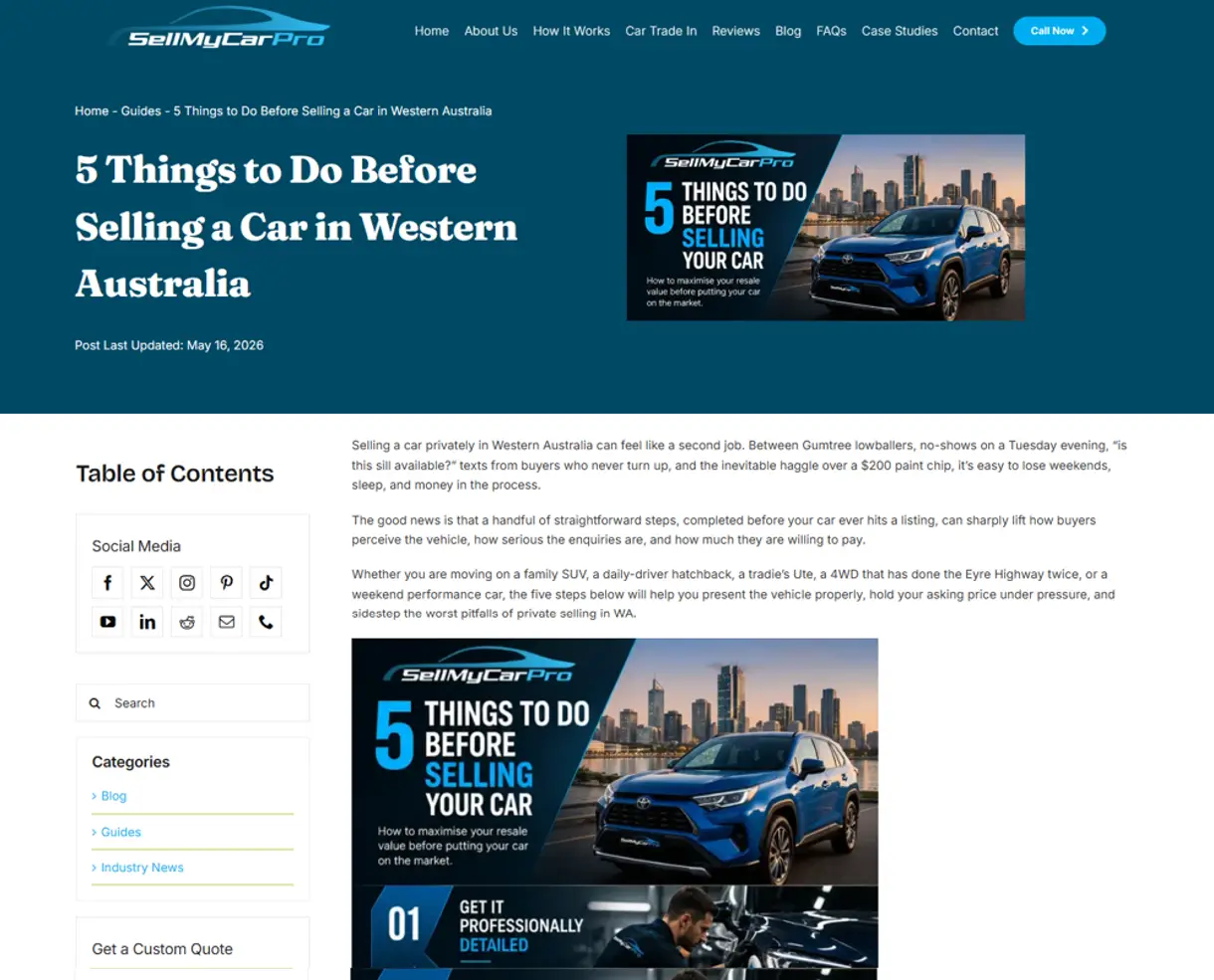
Content Strategy and Ongoing Blog Programme
Content was set up as both a search-traffic engine and a credibility builder. We mapped a content cluster strategy around the highest-intent search queries in the Perth car-selling space, then built out an ongoing blog cadence covering the questions sellers actually type into Google.
The launch cluster included articles on the best time to sell a car in Perth, how to find a car’s market value, selling a car with finance owing, what happens to insurance when you sell a car, do you need rego papers to sell a car, the luxury car tax, the most profitable way to sell a car, how to maximise resale value, when is the right time to upgrade, and how to sell a car in Western Australia. Each article was optimised for a primary keyword, linked internally to relevant service pages, and structured with FAQ schema to compete in the rich-result space.
The ongoing blog programme has continued past the launch window, with monthly publishing tied directly to keyword research and the search trends surfacing in Google Search Console. Internal linking is reviewed quarterly to keep the cluster compounding rather than fragmenting.
The Outcome
The launch produced exactly what a new product needs in its first 90 days: a clean, integrated digital footprint competing in market with the national platforms from week one, not month nine. Paid search began converting inside the first month. The Google Business Profile started ranking in the local pack for branded and non-branded queries inside the first 90 days. The blog cluster has continued to attract organic traffic on the long-tail queries that drive seller intent in the Perth market.
More importantly, the partnership built a foundation that compounds rather than plateaus. The founder has a single dashboard view across every channel, with attribution flowing cleanly from first click through to phone call, form fill, or completed valuation. Channel performance is reviewed against revenue rather than against vanity metrics, and budget keeps moving toward the work that produces qualified seller enquiries.
The work has continued well past the launch window because that is what a partner project looks like. New service pages, expanded blog clusters, refreshed ad creative, and quarterly strategy reviews are all part of the same engagement that started before the brand was registered. A new product in a competitive vertical does not get to coast on the launch playbook for long, and the ongoing partnership keeps Sell My Car Pro evolving as the market shifts.
Project Tags: New Product Launch | Partner Project | Go-To-Market Strategy | Google Business Profile Setup | Google Ads | Meta Ads | Social Media Setup | On-Site SEO | Conversion Testing | Content Strategy | Ongoing Blog Programme
On this page
We’re here to help you DeCODE the Digital World
DeCODE builds breathtaking websites that drive sales for your business without a price that would take your breath away.
We understand that Companies don’t need websites. Companies need a regular stream of high-quality leads. Customers eager, educated, and ready to purchase their products or share their vision. This is the core of a DeCODE build.
In 2026 websites are no longer set and forget, winning an online race is now a marathon, not a sprint. Visually stunning sites with limited back end functionality and no ability to perform in search are redundant.
At DeCODE we build sites that perform.
Adam is a digital marketing specialist, business strategist, and Partner at DeCODE Digital, with 20+ years across marketing, sales, business strategy, and commercial transformation. He works with businesses that need more than a marketing plan: a clear strategy, stronger market position, and a digital presence that drives real commercial growth.